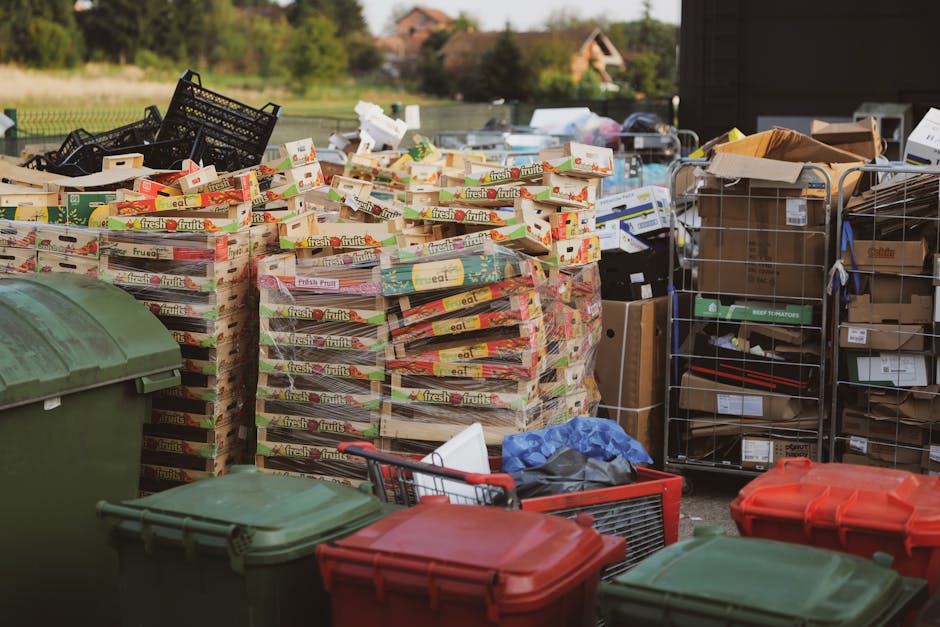
What Newham Council rules mean for Stratford rubbish disposal
Stratford rubbish disposal can feel oddly complicated for something as ordinary as clearing a few bags, a broken wardrobe, or the mess after a move. One minute you just want the stuff gone; the next you are wondering about collection days, bulky waste rules, fly-tipping fines, what the council will take, and what counts as someone else's responsibility. That is exactly why understanding what Newham Council rules mean for Stratford rubbish disposal matters. The rules shape what you can leave out, how you should present it, and when it is safer, easier, or simply more sensible to use a private clearance service.
In practical terms, the council rules are there to keep pavements clear, protect neighbours, support recycling, and reduce the chance of waste ending up dumped on street corners or beside communal bins. They also affect landlords, tenants, shopkeepers, tradespeople, and anyone dealing with household, garden, furniture, or builders' waste in Stratford. Let's be honest: if you get the basics right, disposal is straightforward. If you get them wrong, it can become a nuisance very quickly.
This guide breaks the topic down in plain English, with local context, practical steps, and a realistic view of what to do when council collection is not the best fit. If you are planning a property clearance or need a broader waste solution, you may also find it useful to look at waste removal options in Stratford, or related services such as house clearance and furniture disposal.
Table of Contents
- Why this matters in Stratford
- How the rules work in practice
- Key benefits and practical advantages
- Who needs this and when it makes sense
- Step-by-step guidance
- Expert tips for better results
- Common mistakes to avoid
- Tools, resources and recommendations
- Law, compliance and best practice
- Options and comparison table
- Case study example
- Practical checklist
- Conclusion
- Frequently asked questions
Why What Newham Council rules mean for Stratford rubbish disposal Matters
Stratford sits in a busy part of east London, and rubbish rules are not just there for paperwork. They affect how streets look, how safe shared spaces stay, and how smoothly rubbish moves away from homes, flats, shops, offices, and building sites. In an area with a lot of flats, mixed-use buildings, and narrow access points, the practical side matters as much as the formal rulebook.
The biggest issue is usually not whether waste exists. It is where it ends up, how quickly it is removed, and who is responsible for it. A bag left beside a communal bin can attract complaints within hours. A sofa dumped by a rear entrance can become everyone's problem. And if waste is placed out incorrectly, collection crews may leave it behind. That is inconvenient at best and a genuine health-and-safety risk at worst.
The rules also matter because the council's expectations influence private disposal choices. If you understand what the council will and will not collect, you can decide faster whether a standard household collection is enough or whether you need something more flexible, such as a flat clearance, a garage clearance, or a dedicated builders waste clearance for heavier materials.
There is also a compliance angle. Rubbish that is handled carelessly can become fly-tipping, and in London that is taken seriously. Even innocent mistakes, like assuming the council will collect a pile of mixed materials, can create a problem if the waste blocks access or contains items that need special handling. So yes, the rules matter. Quite a lot, actually.
How What Newham Council rules mean for Stratford rubbish disposal Works
The easiest way to think about Stratford rubbish disposal is to separate it into three broad routes: normal household collection, special or bulky collection, and private removal. The right route depends on the type, volume, and condition of the waste, plus where you live and how quickly it needs to go.
For everyday waste, households generally need to follow collection schedules, bin presentation rules, and recycling separation guidance. That usually means keeping general waste, recycling, food waste, and garden waste in the correct containers if your property is set up for them. Miss the collection window and, well, you are waiting until the next one.
Bulky items are different. A mattress, wardrobe, broken table, or similar item may need a specific bulky waste process. Not every item qualifies for the same treatment, and there may be restrictions on what can be collected, how it must be left, and whether charges apply. This is where a lot of confusion starts, especially in flats where stairwells and shared courtyards make access a bit awkward.
Private waste removal becomes useful when the waste volume is too large, too mixed, too urgent, or too awkward for council collection. That might include a full room clear-out, renovation debris, old office furniture, or a garden pile that has been building for months. Services such as garden clearance, office clearance, and home clearance can be more practical than trying to fit everything into council rules and timelines.
There is one simple rule of thumb: if waste can be presented neatly, in the right containers, and within the council's normal service expectations, council collection may be enough. If it is bulky, mixed, heavy, or time-sensitive, private clearance is often the cleaner solution. No drama, just logistics.
Key Benefits and Practical Advantages
Understanding the council rules gives you more than compliance. It makes disposal calmer and more predictable. That might sound a little dry, but when you are looking at a hallway full of unwanted items, predictability is worth a lot.
- Fewer missed collections: You know what can be left out, and in what form.
- Less clutter around the property: Waste is removed before it becomes a nuisance to neighbours.
- Better recycling decisions: Sorting waste properly can reduce what ends up as residual rubbish.
- Lower risk of complaints: Especially important in flats, terraces, and commercial premises.
- Faster project turnover: Clear waste means quicker handovers, clearer floors, and fewer delays.
- Reduced fly-tipping risk: Knowing the proper route helps avoid leaving items in the wrong place.
There is also a less obvious advantage: clarity. Once you understand the council's role, you can compare it with private options more sensibly. For example, a landlord clearing a rental flat might compare council collection for small bags with a one-off flat clearance for furniture, bin waste, and forgotten odds and ends. A homeowner doing a loft tidy-up may decide that the time saved is worth more than doing multiple trips to different disposal points.
In our experience, people often wait too long because they are hoping a few extra bags will somehow disappear on their own. They will not. Waste has a way of becoming more annoying every day. Strange how that works.
Who This Is For and When It Makes Sense
This topic is relevant to far more people than you might first think. It is not just for homeowners with an overflowing bin store. If you live, work, rent, let, or trade in Stratford, council rules touch your day-to-day reality sooner or later.
Households and tenants
If you are moving out, replacing furniture, clearing a spare room, or handling post-renovation mess, council rules determine how much can go out normally and what needs a different route. Tenants in flats are especially likely to run into access and storage issues, because communal bins fill up quickly and bulky waste can be awkward in shared spaces.
Landlords and letting agents
End-of-tenancy clear-outs, abandoned belongings, and quick turnaround properties all need sensible disposal planning. You want waste gone without creating friction with neighbours or falling foul of building rules. A service such as home clearance or house clearance can save time where multiple rooms or mixed items are involved.
Tradespeople and renovators
Builders' rubble, timber offcuts, plasterboard, broken fittings, and packaging can exceed what normal council collections are designed to handle. That is where the distinction between domestic waste and construction waste becomes important. A builders waste clearance is often the more realistic option.
Businesses and offices
Shops, studios, offices, and small hospitality spaces generate commercial waste, and that usually needs a different arrangement from household rubbish. Desks, chairs, archived paperwork, display materials, and packaging can pile up quietly until there is suddenly no room to move. For those cases, business waste removal is often a better fit than trying to adapt household-style disposal.
People with time pressure or access problems
If you are dealing with a deadline, a stairwell, limited parking, no lift, or a difficult access route, council collection can become awkward very quickly. A private team can often handle the lifting and loading more efficiently. That is one of the reasons services such as loft clearance and garage clearance exist in the first place.
Step-by-Step Guidance
If you want to stay on the right side of the rules and avoid unnecessary faff, follow a simple process. It does not need to be complicated.
- Identify the waste type. Separate general rubbish, recycling, food waste, garden material, furniture, and building debris.
- Check whether it is a normal collection item. Small domestic waste is usually straightforward. Bulky or unusual items may not be.
- Look at access and storage. Can the waste be placed neatly without blocking pavements, doors, or communal areas?
- Decide whether council collection is realistic. If the volume is small and the timing works, council rules may be enough.
- Book private removal if needed. For large, mixed, or urgent clearances, use a specialist service rather than waiting around.
- Prepare the items for removal. Keep loose waste bagged, flatten where possible, and separate items that should not be mixed.
- Keep the area clear for loading. This sounds minor, but it speeds everything up and reduces the chance of damage.
A real-world example: someone clearing a Stratford flat after a long tenancy may have a few bin bags, an old bed frame, a broken chest of drawers, and some kitchen clutter. That is not really a "leave it and hope" situation. It is more sensible to sort the bags for ordinary collection and arrange a targeted clearance for the furniture. Simple, clean, done.
If you want a more controlled service for valuable or awkward furniture, you can also look at furniture clearance as part of the wider plan.
Expert Tips for Better Results
There are a few habits that make rubbish disposal much easier in Stratford. None of them are flashy, but they save time and stress.
- Do not mix everything together. Mixed waste is harder to move, sort, and recycle.
- Break items down where safely possible. Flat-pack cardboard, dismantled shelves, and empty boxes are easier to handle.
- Use the right service for the right job. Garden waste, furniture, and office items each create different disposal demands.
- Think about neighbours and shared access. In flats, one badly placed item can annoy half the building.
- Book before the pile becomes unmanageable. This is one of those things that gets more expensive in time and effort the longer it sits.
One useful trick is to do a quick "three-pile" sort before you arrange disposal: keep, council/bin, and remove separately. It takes fifteen minutes and can save a lot of back-and-forth later. If the keep pile starts growing again while you are sorting, that is your sign to stop hesitating.
For garden jobs, keep soil, branches, cuttings, and pots separate where possible. For office or shop clear-outs, separate reusable items from general waste and old equipment. And if you are unsure whether something belongs in ordinary rubbish, treat it as a separate item until you have checked. Better cautious than wrong.
Common Mistakes to Avoid
Most disposal mistakes are boringly predictable, which is good news because that means they are easy to avoid. The common problems usually come from rushing, guessing, or assuming the council will take everything.
- Leaving waste in the wrong place: Pavements, shared entrances, and communal bin stores are not dumping grounds.
- Assuming bulky items are always accepted: They often need a separate process.
- Mixing different waste types: Especially awkward with renovation waste and household junk.
- Forgetting access rules: A service may not be able to remove waste if it blocks routes or creates hazards.
- Waiting until the deadline is desperate: Last-minute disposal choices are usually the worst ones.
- Ignoring cleanliness and safety: Broken glass, sharps, damp waste, and mouldy items need extra care.
One slightly annoying truth: what seems like "just a few items" can turn into a full clearance once you start looking properly. That is not failure. It is just reality with a dust sheet over it.
Tools, Resources and Recommendations
You do not need special software or complicated equipment to manage Stratford rubbish disposal well. A few practical tools and a bit of organisation go a long way.
- Sturdy bin bags and boxes: Useful for sorting and transporting smaller waste safely.
- Marker pens or labels: Handy for marking keep, recycle, donate, or remove piles.
- Gloves and basic protective gear: Especially important for lofts, gardens, garages, and building waste.
- Measuring tape: Helps if you need to know whether bulky items can fit through doors or stairwells.
- Phone notes or a quick checklist: Good for tracking what needs council handling and what needs private clearance.
For larger or more involved clearances, it helps to work with a provider that is clear about safety, payment, and how the job is carried out. Pages such as pricing and quotes, insurance and safety, and health and safety policy are useful places to review before booking anything.
If sustainability matters to you, ask how waste is sorted and handled. A responsible clearance approach should always try to keep reusable and recyclable material out of landfill where possible. You can also explore the company's approach to recycling and sustainability if you want a better sense of how materials are managed.
Law, Compliance, Standards, or Best Practice
When people talk about rubbish rules, they often mean a mix of council expectations, environmental duties, and sensible site practice. You do not need to become a legal expert, but a basic understanding helps you stay safe and avoid expensive mistakes.
In plain English, the key ideas are simple:
- Waste should be stored and presented properly. Do not block public paths or shared access.
- You are responsible for what you put out. If waste is dumped incorrectly, "I thought it would be fine" is not much of a defence.
- Some waste needs special care. This includes items that are sharp, contaminated, heavy, or difficult to move safely.
- Commercial and domestic waste are not the same thing. Businesses should not assume household collection rules apply to them.
- Duty of care matters. In practice, that means knowing where waste goes and using a reputable carrier.
Best practice is usually more conservative than the minimum rule. For example, even if an item might technically be collected, it may be wiser to package it better, move it sooner, or book a service that can remove it without creating risks in the stairwell or on the pavement. Safety first. Then tidiness. Then speed.
If you are arranging waste from a property with awkward access, shared spaces, or a heavier load, the safer route is often to use a professional team rather than improvising. That is especially true for furniture clearance, house clearance, and builders waste clearance, where lifting and loading can become risky quickly.
Options, Methods, or Comparison Table
Here is a straightforward comparison of the main disposal options people in Stratford tend to consider.
| Option | Best for | Strengths | Limitations |
|---|---|---|---|
| Routine council collection | General household waste and standard recycling | Simple, familiar, usually best for day-to-day use | Limited by schedules, container rules, and waste type |
| Bulky waste collection | Sofas, mattresses, large household items | Useful for a few large items without a full clearance | May have restrictions, charges, or booking requirements |
| Private waste removal | Mixed, urgent, heavy, or large-volume waste | Flexible, faster, handles awkward loads and access | Usually a paid service |
| Specialist clearance | Flats, lofts, garages, offices, gardens, builders' waste | Tailored to the job, often more efficient | Needs the right service match |
The right answer is not always the cheapest one on paper. If you have spent half a day moving items, waiting on missed collections, or trying to work around narrow corridors, the "cheap" option suddenly feels less cheap. Funny how that happens.
Case Study or Real-World Example
Picture a typical Stratford flat after a tenancy ends. There is a broken desk, a small sofa, a few black bags, old kitchen bits, and some cardboard from new furniture. The tenant is gone, the landlord wants the place ready for cleaning, and the stairwell is busy because other residents are coming and going.
In that situation, trying to solve everything through one council route may not be the smoothest answer. The bags may be fine for normal disposal, but the desk and sofa need more thought. If they are left in a communal area while waiting, they can become a nuisance. If they are taken apart badly, they create sharp edges and scattered debris. Nobody wants that at 7.30 on a weekday morning, with the smell of takeaway drifting through the hallway and someone else already annoyed about parking.
A more practical approach is to separate the waste into categories, clear the small items through the usual route, and arrange a specialist service for the bulky pieces. That could mean a combined flat clearance and furniture disposal approach. The result is tidier, quicker, and less stressful for everyone involved, including the neighbours who did not ask to become part of the project.
That is really the heart of it: the council rules help you understand the baseline, but the best disposal plan is the one that fits the property, the waste, and the timing.
Practical Checklist
Use this checklist before you put anything out or book a clearance.
- Have I identified the waste type correctly?
- Is any of it recyclable, reusable, or better handled separately?
- Am I allowed to place it where I plan to leave it?
- Will it block access, pavements, or communal areas?
- Is it too bulky, too heavy, or too mixed for normal collection?
- Do I need specialist help for furniture, garden waste, office items, or builders' debris?
- Have I checked whether the job needs a faster or more flexible service?
- Have I kept sharp, wet, or contaminated items safely separated?
- Do I know who is responsible for the waste until it is collected?
- Have I prepared the area so removal can happen safely and efficiently?
If you can tick most of those boxes, you are already ahead of the game. And if you cannot, that is usually a sign that you should slow down a bit and choose the right disposal route rather than the quickest-looking one.
Conclusion
What Newham Council rules mean for Stratford rubbish disposal is, at heart, a question of practical responsibility. The rules tell you how to manage everyday waste properly, how to handle bulky or awkward items, and when you need a more tailored removal solution. Once you understand that, the whole process becomes much less stressful.
The real advantage is not just compliance. It is peace of mind. You know what can go out, what needs sorting, what needs careful handling, and when to bring in help. That makes homes tidier, flats easier to manage, and businesses more efficient. It also keeps the street outside looking a little calmer, which is never a bad thing in a busy part of London.
Get a free quote today and see how much you can save.
Take the simplest sensible next step, and give yourself an easier day tomorrow. Sometimes that is all rubbish really needs: a clear plan, a proper sort, and a firm decision to get it gone.
Frequently Asked Questions
What does Newham Council rubbish disposal mean for Stratford residents?
It means your waste needs to follow the council's collection, sorting, and presentation rules. In practice, that affects what you can put out, where you put it, and whether it needs a bulky collection or a private clearance service.
Can I leave bulky items beside the bin for collection?
Usually not as a casual fix. Bulky items often need a specific collection route or a separate service. Leaving them beside bins can create obstruction, complaints, or a missed collection.
What happens if I put rubbish out on the wrong day?
It may not be collected, and it can become an eyesore or hazard. In shared buildings, the waste may also be moved or reported. Better to check timing than hope for the best.
Is fly-tipping a real risk in Stratford?
Yes. Any waste left in the wrong place can be treated as dumping if it is abandoned or placed irresponsibly. That is why correct disposal matters so much in busy streets and communal areas.
Do tenants or landlords have responsibility for rubbish left after a move?
Usually the person or party who leaves the waste, or arranged the occupancy, may have responsibility depending on the situation. In rental properties, it is sensible to make disposal arrangements clear before handover.
When should I use a private rubbish removal service instead of the council?
Use private removal when the waste is bulky, mixed, urgent, hard to access, or simply too much for a routine collection. It is often the cleaner option for clear-outs and renovations.
Can garden waste be put out with normal rubbish?
Not always. Garden waste often needs its own treatment or collection approach, especially if it includes soil, branches, and mixed green waste. A dedicated garden clearance is often easier.
What is the best option for old furniture in Stratford?
It depends on condition, quantity, and access. A single item may fit a bulky collection route, while a full room or flatful of furniture is usually better handled through a furniture or house clearance service.
How do I know whether waste is commercial or domestic?
If it comes from a business, office, shop, or trade activity, it is usually commercial. That distinction matters because household disposal rules do not automatically apply to business waste.
Are there special rules for flats and communal buildings?
Yes, and they matter a lot. Access, bin storage, neighbour impact, and fire safety all become more important in shared spaces. Flat residents often need to be extra careful with placement and timing.
What if I am not sure whether an item is allowed?
Treat it as a separate item until you have confirmed the right route. When in doubt, do not force it into the wrong collection method. A cautious approach usually saves time later.
Can a clearance service help with lofts, garages, or offices too?
Absolutely. Those are common jobs where waste builds up gradually and then suddenly needs removing. Services such as loft clearance, garage clearance, and office clearance are designed for exactly that kind of situation.
What should I check before booking a clearance company?
Look at safety, insurance, pricing clarity, and how the waste is handled. It also helps to check the company's approach to recycling and sustainability so you know the material is being handled responsibly.